Liquid Biopsy and ctDNA - A New Era in Cancer Testing
Discover how liquid biopsy and circulating tumor DNA are revolutionizing cancer detection and monitoring with a simple blood test.
Anna from OncoSteps
9 min read
Loading content...
Discover how liquid biopsy and circulating tumor DNA are revolutionizing cancer detection and monitoring with a simple blood test.
If you're facing cancer, you've likely experienced the anxiety of waiting for test results or undergoing invasive procedures. The good news is that medical science is evolving rapidly, and one of the most exciting advances is liquid biopsy - a simpler, less invasive way to detect and monitor cancer using just a blood sample.
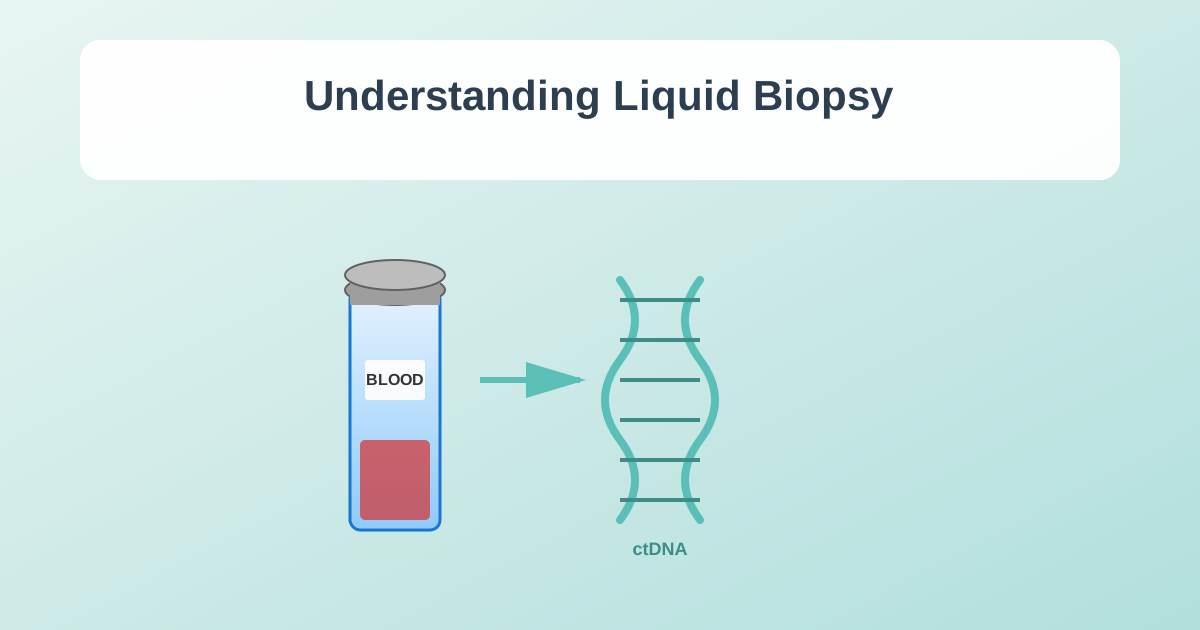
Liquid biopsy is a minimally invasive approach to cancer testing that analyzes markers released by tumors into your bloodstream and other body fluids. Unlike traditional tissue biopsy, which requires surgical removal of a piece of tumor tissue, liquid biopsy typically uses a simple blood draw - similar to routine blood work.
Think of it as catching tiny clues that cancer cells leave behind as they naturally die or shed material into your bloodstream. These clues can tell your medical team important information about your cancer without the need for surgery or more invasive procedures.
During a liquid biopsy, a healthcare provider draws a small blood sample from your arm. This sample is then sent to a specialized laboratory where scientists use advanced molecular techniques to detect and analyze:
The most commonly analyzed component is ctDNA, which has proven to be particularly valuable for cancer monitoring.
Circulating tumor DNA (ctDNA) refers to small fragments of DNA shed from cancer cells as they die or turn over. According to research published in Nature, these fragments enter the bloodstream and can be detected using sophisticated molecular techniques like PCR and next-generation sequencing.
Here's what makes ctDNA special:
ctDNA is released into the blood primarily when cancer cells die (through natural cell death or treatment), but also through active secretion. It's a subfraction of cell-free DNA, which is released by both tumor and normal cells. Tumor-derived ctDNA is typically shorter, which helps distinguish it from normal DNA.
The Cleveland Clinic explains that liquid biopsy has several important applications in modern cancer care:
Liquid biopsy can help identify the presence of cancer, especially when traditional biopsies are difficult, risky, or not feasible due to:
By analyzing ctDNA, doctors can detect:
This information helps your medical team choose the most effective treatment for your specific type of cancer.
By testing your blood regularly during treatment, your doctors can:
This is much faster and less invasive than waiting for imaging scans to show changes.
After surgery or therapy, small amounts of cancer may remain that are too tiny to see on scans. Studies show that ctDNA testing can detect these microscopic traces of disease, allowing for earlier intervention before cancer returns.
Cancer cells can change over time, especially in response to treatment. Liquid biopsy allows doctors to track these genetic changes and adjust treatment strategies as resistance mutations emerge.
You may be familiar with traditional tumor markers like CEA (Carcinoembryonic Antigen) or CA19-9, which are proteins often measured in blood tests for certain cancers. While both ctDNA and traditional markers are detected through blood tests, they differ significantly:
What they measure: Proteins produced by cancer cells or by the body in response to cancer
Strengths:
Limitations:
What it measures: DNA fragments with cancer-specific genetic mutations
Strengths:
Limitations:
In practice: Many doctors use both types of tests together, along with imaging and physical examinations, to get the most complete picture of your cancer.
The adoption of liquid biopsy technology is expanding globally, though availability and clinical use vary by country and healthcare system.
In the United States, ctDNA-based liquid biopsies are increasingly integrated into cancer care. The FDA has approved several liquid biopsy platforms, including:
In November 2024, the FDA released guidance clarifying the use of ctDNA as a biomarker in cancer drug development and clinical trials. The agency has approved tests particularly for lung, breast, and colorectal cancers, where they help doctors select targeted therapies and monitor treatment response.
European countries have been actively embracing liquid biopsy technology through large research programs and clinical trials. The European regulatory agencies have been evaluating ctDNA tests, with several approved for clinical use in conjunction with multi-center studies.
Major initiatives include:
Asian countries, particularly Japan, have been at the forefront of liquid biopsy research and implementation. Studies like CIRCULATE-Japan and the GALAXY study have demonstrated the prognostic value of ctDNA in colorectal cancer and other tumor types.
Asian institutions are also developing highly sensitive ctDNA assays and advancing precision oncology through national liquid biopsy programs.
The International Society of Liquid Biopsy (ISLB) is working with researchers and clinicians worldwide to establish quality control standards and harmonize testing methodologies. This collaboration aims to ensure reliable and reproducible results across different laboratories and healthcare systems.
If your healthcare team recommends a liquid biopsy, here's what typically happens:
No special preparation is usually needed, and you can typically continue your normal activities immediately after the blood draw.
Research in liquid biopsy is advancing rapidly. Scientists are working on:
While liquid biopsy won't completely replace traditional biopsies or imaging in the near future, it's becoming an increasingly valuable tool in the cancer care toolkit.
While liquid biopsy is a powerful tool, it's important to remember:
"Liquid biopsy represents hope - hope for earlier detection, more personalized treatment, and better monitoring of how therapy is working. While the technology continues to evolve, it's already making a difference in cancer care today."
Understanding the tools available for detecting and monitoring cancer can help you feel more empowered in your treatment journey. If you're interested in liquid biopsy:
Remember, you're not alone in this journey. Your healthcare team is there to guide you through each step, explain your options, and work with you to develop the best possible treatment plan.
You're not alone - we're here to support you every step of the way.